Sometimes the most responsible thing we can do in the middle of chaos is step away from it for a moment.
Over the past few days, the internet has been filled with noise. Every platform, every news station, every podcast seems to have an opinion about the latest developments in the Middle East. The United States has carried out strikes against Iran, and suddenly Americans everywhere are trying to make sense of what happened, why it happened, and what comes next. Something that should have been dealt with 47 years ago.
But if you spend even a few minutes online, you’ll notice something else: confusion and emotional manipulations are everywhere.
Mainstream media outlets are screaming that Iran is “winning.” Political commentators are talking over one another. Social media has become a battlefield of competing narratives. And in my opinion, many of the same globalist forces that have shaped public opinion for years have activated their usual machinery to influence how people interpret what is happening.
At the same time, some podcasters and commentators are arguing that this action contradicts the “America First” philosophy. They point out that Donald Trump ran on the promise of “no foreign wars” and suggest that any military action automatically violates that principle.
But let me ask those people something:
When a regime openly chants “Death to America,” burns the American flag on camera, and repeatedly threatens the American people, what exactly are we supposed to do? When leaders openly state their hostility toward the United States and intelligence agencies warn about potential attacks, are we expected to fold our arms and pretend the danger does not exist?
“No foreign wars” does not mean surrender. It does not mean waiting passively for threats to become tragedies.
Protecting American lives has always been the first responsibility of any president.
The deeper problem is that many Americans today are geopolitically illiterate. That is not entirely their fault. For most of our lifetimes, the United States has not experienced the kind of existential threats that many other nations have faced throughout history. Because of that, it is easy to forget that the conflicts unfolding around the world today could shape the safety and stability of the next generation.
If serious threats are ignored today, our children and grandchildren could be the ones forced to deal with the consequences.

NATO has refused to support this administration in fighting Iran. The EU has also declined, stating that this is not their war—the same EU that is funded in part by U.S. tax dollars. The so-called new world order is being challenged. Regimes in places like Venezuela, Cuba, and Brazil are shifting. Groups like Hamas, Hezbollah, and ISIS have long been part of this broader global conflict. Some of these threats have even made their way closer to home.
The Trump administration is confronting what many believe is a deeply embedded system of influence—one that has shaped politics and institutions for years. The panic, from that perspective, is real.
If I remember correctly, the Obama administration once presented Iran as powerful and nearly untouchable, suggesting it would take years to disarm them. Yet recent actions suggest that weakening Iran’s capabilities can happen much faster than previously believed.
There is also growing frustration with leadership in countries like the UK, Germany, and France, with some believing those governments are not acting in the interest of ordinary people. From that viewpoint, current U.S. leadership is challenging those dynamics—and not everyone is comfortable with that.
There are also ongoing concerns about past policies, including uranium-related decisions during the Obama administration.
The information war is intense. People who have not been paying close attention are now reacting quickly, often without full context. At the same time, there are fears about physical threats, including the idea of sleeper cells operating within the United States.
Meanwhile, some traditional allies—who previously expected U.S. support in other conflicts—are now choosing not to support the U.S. regarding Iran. This has led many to question who America’s real allies are.
NATO’s principle is that if one member is attacked, others should come to its aid. Yet in this situation, support has not been unified. That raises an important question: why is the U.S. still funding NATO at current levels?
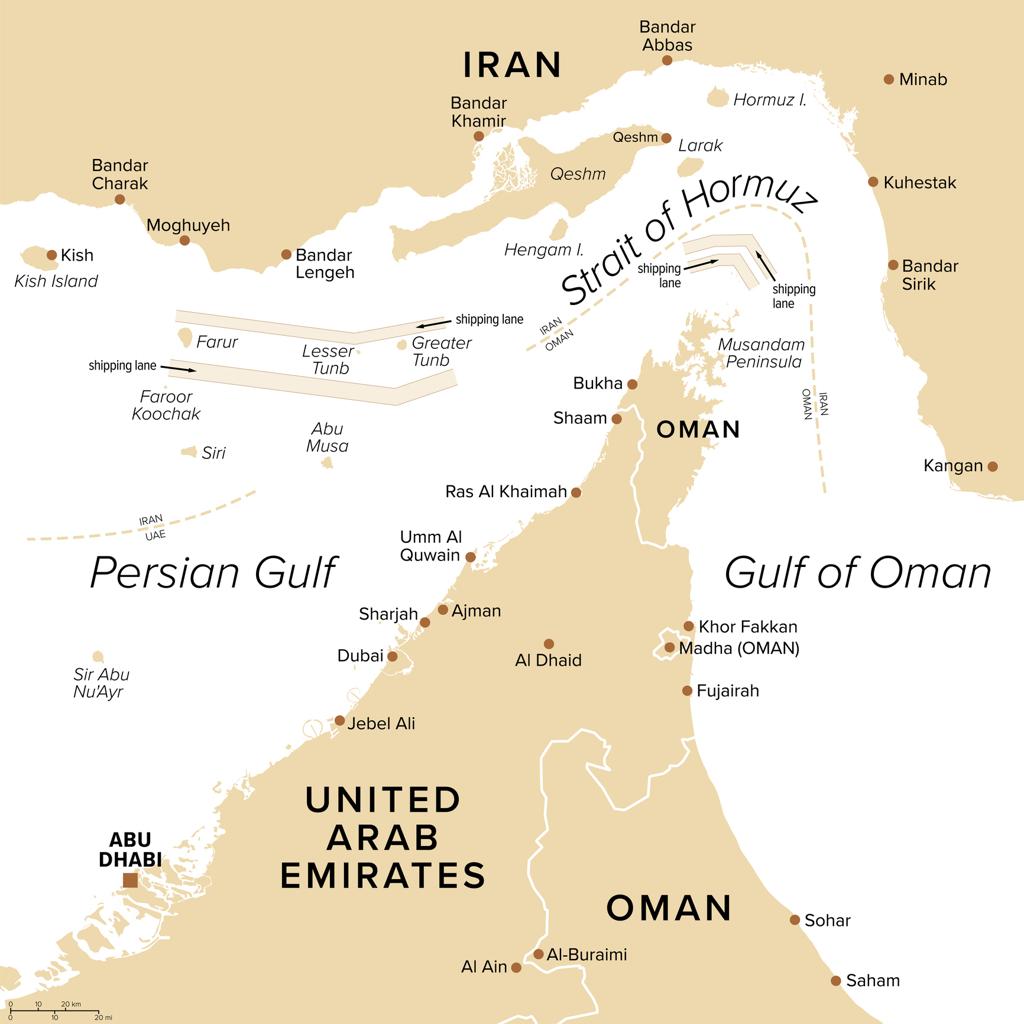
Now let’s look at those recent gas prices.The Strait of Hormuz is a narrow waterway between Iran and Oman where a huge portion of the world’s oil passes through. Iran controls the north side and has military forces like boats, missiles, and drones that allow it to threaten ships, while Oman controls the south side and helps keep things stable. The United States does not own the Strait but regularly patrols it with its navy to keep trade moving. Iran could disrupt traffic by using mines, attacking ships, or seizing tankers, but it cannot shut the Strait down for long because other countries—especially the U.S. and its allies—would step in quickly. Doing so would also hurt Iran’s own economy, since it relies on the same route to export its oil. You can take a breather on that one.
Meanwhile, information warfare is happening in real time. We are being bombarded from every direction with narratives—some from commentators who barely understand the history of the region, and others from voices who are openly paid to push particular agendas.
The result is a population drowning in noise.
And that is exactly why sometimes the healthiest response is to step away.

Take a break from the endless cycle of headlines and hot takes. Turn off the constant stream of notifications and political arguments. Give your mind space to breathe.
Pick up a book. Read a magazine. Open the Bible. Sit down with your family for dinner without phones on the table. Invite friends over and play board games or talk late into the evening like people used to do before the internet turned every moment into a debate.
The world will keep moving whether we are refreshing our feeds every five minutes or not.
Remember: you may be part of the change this country needs, but change will come with or without you scrolling through social media.
Sometimes the most powerful thing you can do is step away from the noise long enough to regain clarity.
Because a clear mind is far more valuable than a loud opinion.
 Takang Nji
Leave a comment